

Robots Take on Demanding Tasks as CMU–AU System Partners with Stanford Robotics Center to Build More Human-Centered Smart Healthcare
From an overseas visit to the signing of an MoU, the partnership aims to bring advanced research into clinical care
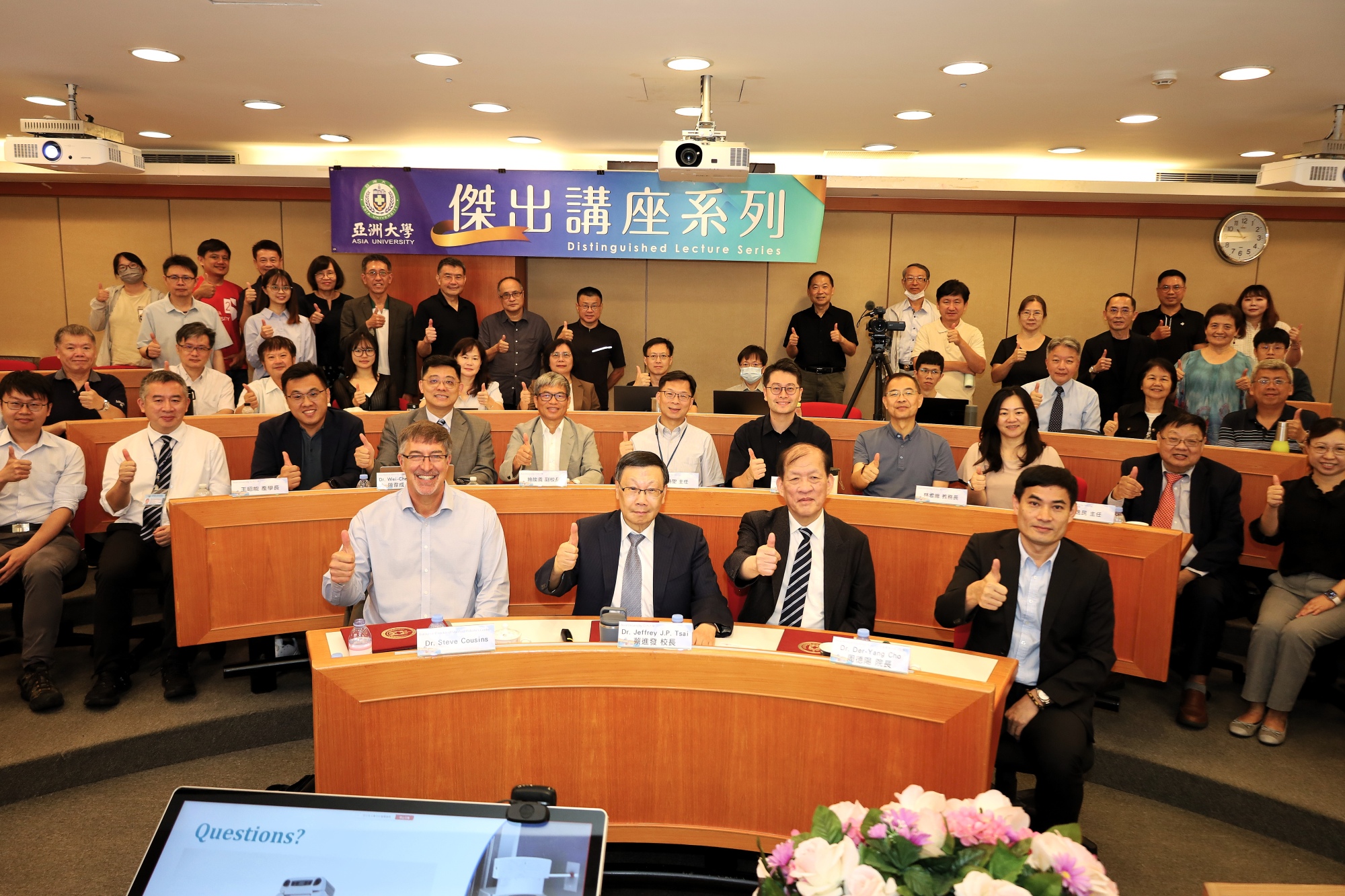
The CMU-AU System and Stanford Robotics Center sign an MoU and take a group photo after the ceremony.
When nurses walk as many as 20,000 steps a day in hospital wards, and the global shortage of healthcare workers may approach 10 million by 2030, can robots take over heavy and repetitive tasks and give time back to patients? Dr. Steve Cousins, Executive Director of the Stanford Robotics Center, gave a confident answer: yes.
Asia University and China Medical University Hospital held the "CMU-AU System × Stanford Robotics Center: Advanced Smart Healthcare Forum" on July 13 at Asia University. Dr. Steve Cousins was invited to Taiwan for the forum, during which the three parties also signed a Memorandum of Understanding to jointly advance medical robotics, embodied AI, and international talent cultivation.
The story began in March this year, when Asia University President Jeffrey J.P. Tsai and China Medical University Hospital Superintendent Der-Yang Cho led a delegation to visit the Stanford Robotics Center in the United States. The delegation saw firsthand how AI and robotics are moving from laboratories into real healthcare settings, and was deeply impressed by the forward-looking research at the Stanford Robotics Center. Four months later, this cross-Pacific exchange has turned into concrete collaboration.
Despite the impact of a weekend typhoon, which caused delays to some speakers’ and guests’ flights, the forum was held as scheduled. President Tsai had just returned from an education fair in Malaysia, while Professor Augie Tsai of the Department of Artificial Intelligence also traveled back from the United States after a long flight. Representatives from medicine, AI, robotics, and industry still gathered at the forum, creating lively exchanges throughout the event. The host humorously remarked, “With the extra ‘blessing’ of the typhoon, we believe the collaboration between the CMU-AU System and the Stanford Robotics Center will become even stronger and more resilient.” The comment drew laughter from the audience and added warmth to a forum that had successfully taken place despite many challenges.

Superintendent Der-Yang Cho, Executive Director Steve Cousins, and President Jeffrey J.P. Tsai, from left, take a photo at the Stanford Robotics Center in March 2026.

Asia University President Jeffrey J.P. Tsai (right) presents a commemorative gift to Dr. Steve Cousins of Stanford (center).
President Tsai shared that the technology sector estimates the number of robots worldwide may exceed one billion in the future, and that the scale of the robotics industry may even surpass that of personal computers. As humanity gradually enters an era of coexistence with robots, society must learn about the capabilities and impact of robots early, just as it has learned to understand and use AI. President Tsai noted that during his March visit to the Stanford Robotics Center, he was deeply impressed by its integration of engineering, medicine, and human-robot interaction. In the face of population aging and healthcare workforce shortages, the value of robotics lies not only in improving efficiency, precision, and productivity, but more importantly in enhancing patients’ quality of life and reducing the burden on frontline healthcare workers.
In his keynote speech, "Thoughts on the Future of Robotics," Dr. Steve Cousins discussed applications ranging from industrial robotic arms, surgical robots, and deep-sea exploration robots to assistive devices for older adults and healthcare robots. He pointed out that the biggest difference between robots and ordinary computers or generative AI is that robots can sense their environment and take action in the real world. Technological development, he emphasized, should not only ask “how to build,” but also “whose problem we are trying to solve.” “We develop robots to help people live better lives,” he said. Speaking about global population aging, he also noted humorously that time does not stop and everyone will grow older, which is why useful technologies must be brought into daily life more quickly.
The question-and-answer session following the keynote was highly engaging. President Tsai, Dr. Wei-Cheng Chen, Chief Secretary of China Medical University Hospital, and Chair Professor Kuan-Tsae Huang of Asia University raised questions twice, followed by further exchanges with Dean of Academic Affairs Chun-Wei Lin, Superintendent Der-Yang Cho, Professor Ruey-Ming Liao, Chair of the Department of Psychology at Asia University, and Mr. Wing Chow, Manager of EverBot Technology. The discussion covered how clinical needs can be connected with engineering research and development, hospital infrastructure, human-robot interaction, psychological companionship, aging and home care, talent cultivation, and product positioning.

Dr. Steve Cousins, Executive Director of the Stanford Robotics Center, delivers a keynote speech on the future of robotics.

Dr. Steve Cousins engages in lively exchanges with faculty members from the CMU-AU System, offering insights into the development trends of medical AI technologies.
Dr. Cousins responded that medical robotics often begins with clinical professionals identifying real problems, followed by engineers, healthcare professionals, and industry teams working together to find solutions. Hospitals can also connect automatic doors, elevators, and information systems with robots to create environments better suited to human-robot collaboration. He also stated directly, "Do not be obsessed with making humanoid robots." As long as a robot can reliably take on tasks such as delivery, inspection, and documentation, it can create the most valuable form of differentiation.
Professor Augie Tsai gave a talk centered on the theme "From Humanoid to Humanity," introducing research on healthcare embodied AI and robotics. He explained that future robots will no longer merely move according to preset coordinates. Instead, through human demonstration, virtual reality devices, and end-to-end imitation learning, robots will learn to open doors, carry items, and deliver objects. His team is currently collecting local clinical data to build a healthcare embodied AI foundation model centered on hospital workflows, enabling robots to understand multi-person interactions and social cues. For example, when a doctor and nurse are speaking, a delivery robot should know when to approach appropriately; when people are walking in a hallway, it should also move aside proactively. As Professor Tsai described, "Robots must not only know how to perform tasks, but also learn the social etiquette of hospitals."
Dr. Wei-Cheng Chen of China Medical University Hospital introduced EirBot, a nursing robot adopted by the hospital. EirBot can provide personalized health education Q&A, transcribe nursing records by voice, offer environmental guidance, and deliver medical supplies. In practice, it can reduce approximately 30 percent of repetitive work for nursing staff. Its most frequently used functions are voice-assisted documentation and item delivery. When medicine delivery is involved, medications remain locked inside the robot throughout the process. After the robot arrives at the ward, a nurse must use an identification card to unlock the compartment and personally hand the medicine to the patient, ensuring efficiency while meeting regulatory and patient safety requirements. Dr. Chen emphasized, "AI cannot complete care on its own. It is still the healthcare team that truly helps patients." The role of technology is to take over repetitive and time-consuming work, allowing healthcare professionals to devote more time to clinical judgment, communication, and companionship.
Superintendent Der-Yang Cho stated that China Medical University Hospital is actively developing hospital and home care robots in response to the needs of a super-aged society and the shortage of care workers. The MoU is not merely a symbol of international exchange. Moving forward, the three parties will further engage in embodied AI, force and tactile sensing, clinical validation, international research, and advanced talent exchange. The goal is to bring research outcomes from laboratories into hospitals and gradually extend them to home and community care settings.
President Tsai emphasized that in the new era of human-robot coexistence, universities must not only invest in advanced technology research and development, but also cultivate interdisciplinary talent capable of understanding AI, medical practice, and human needs at the same time. In the future, Asia University will continue to integrate the international research strengths of the Stanford Robotics Center, the clinical settings of China Medical University Hospital, and the university’s foundations in AI and robotics research. Through these efforts, Asia University aims to build a complete chain from talent cultivation, technology development, and field validation to real-world application, allowing technology to truly reduce the burden on healthcare workers, improve the quality of care, and demonstrate the university’s commitment to addressing social needs through interdisciplinary innovation and advancing smart healthcare.

Scholars at the forum actively raise questions and engage in interdisciplinary discussions on the development of smart healthcare systems and their clinical implementation.

Asia University faculty members seek advice from the Stanford expert on the future social etiquette of human-robot coexistence.
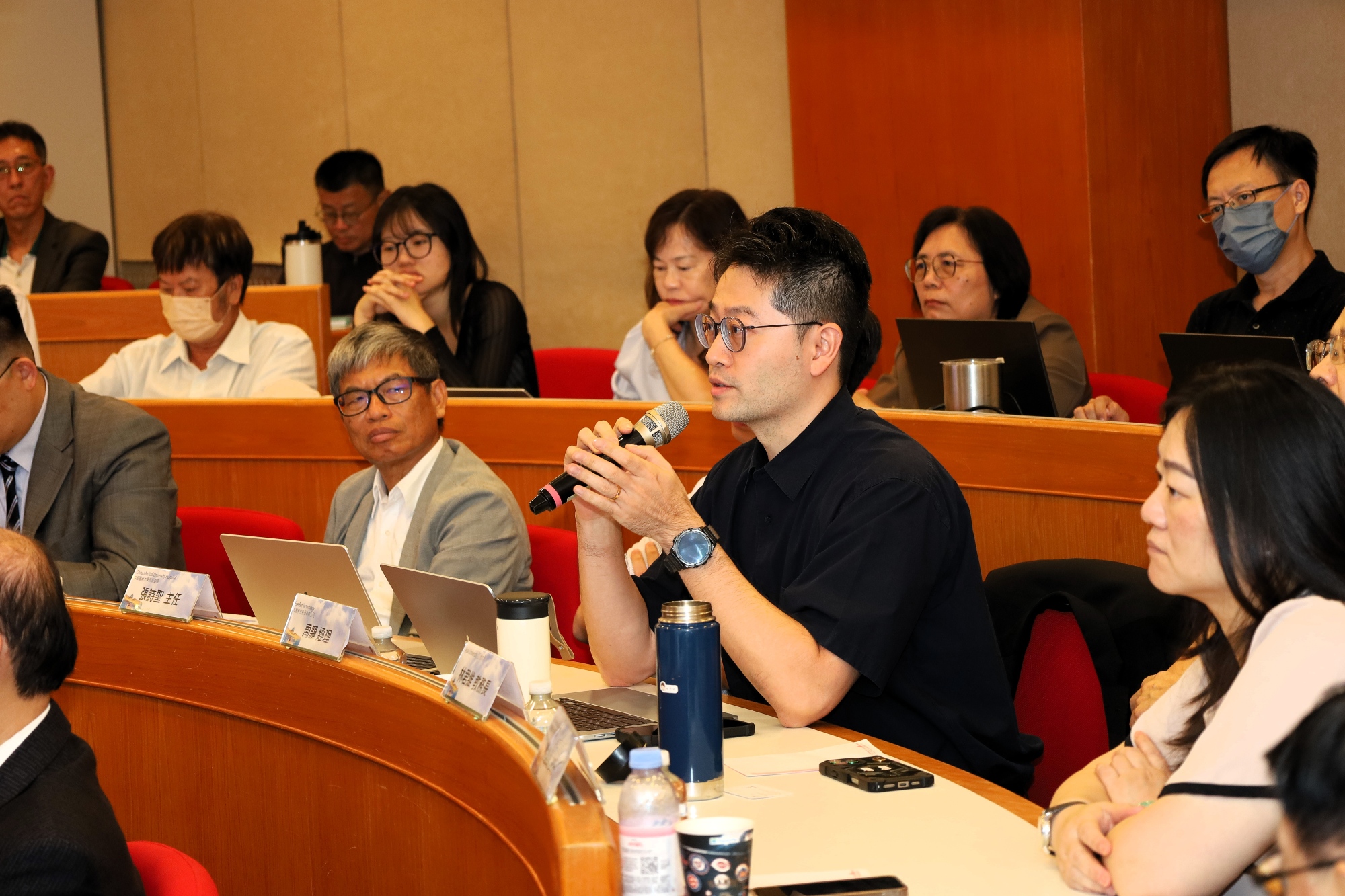
The Q&A session features dynamic exchanges, with medical and technology experts sharing insightful perspectives.
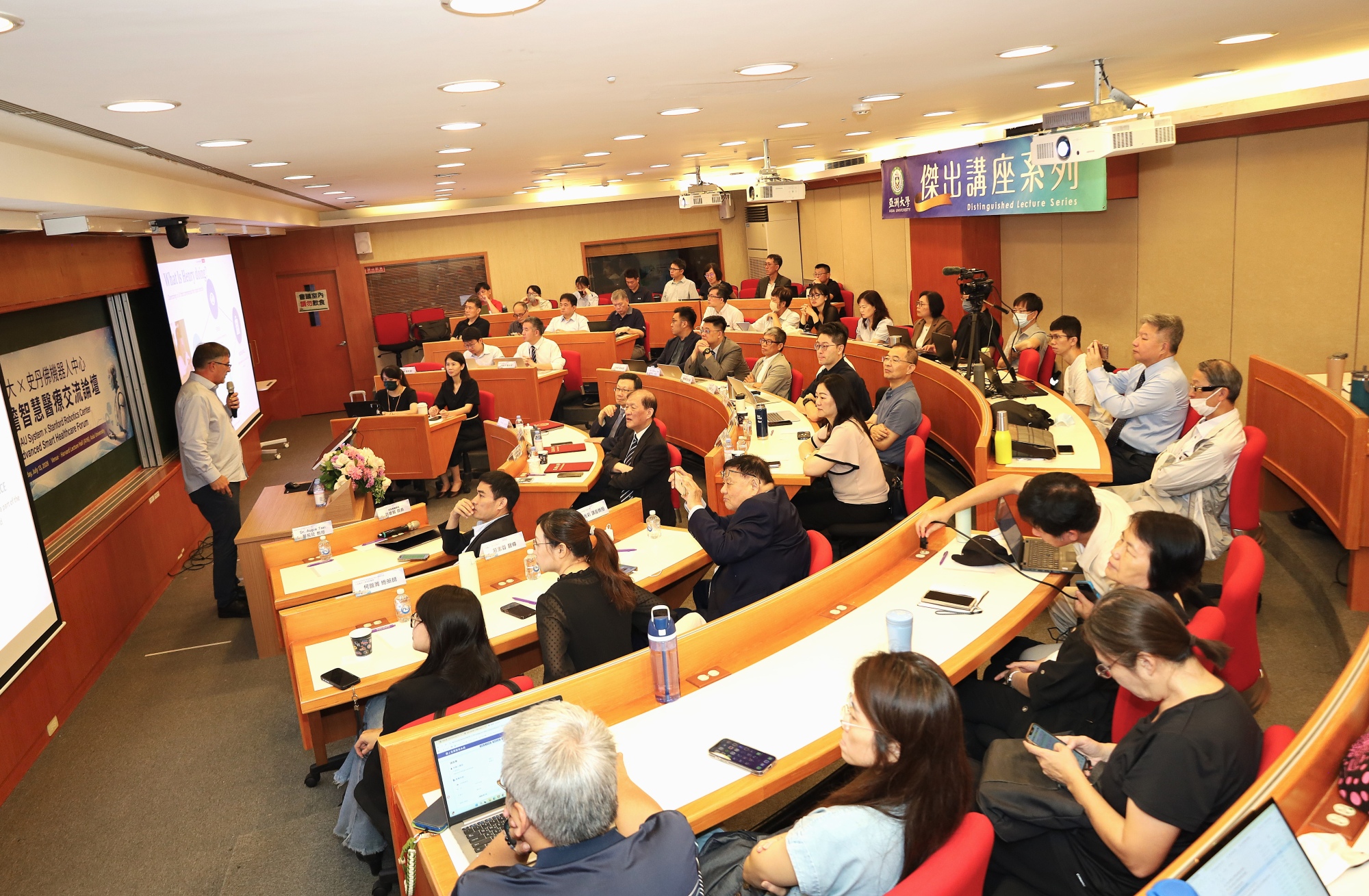
A panoramic view of the "Advanced Smart Healthcare Forum," where Asia University’s Harvard Lecture Hall was filled with participants and vibrant discussions.

Professor Augie Tsai of Asia University’s Department of Artificial Intelligence (right) delivers a talk on the development of embodied AI in smart healthcare.

Dr. Wei-Cheng Chen, Chief Secretary of China Medical University Hospital, explains how EirBot helps return healthcare to the essence of care.
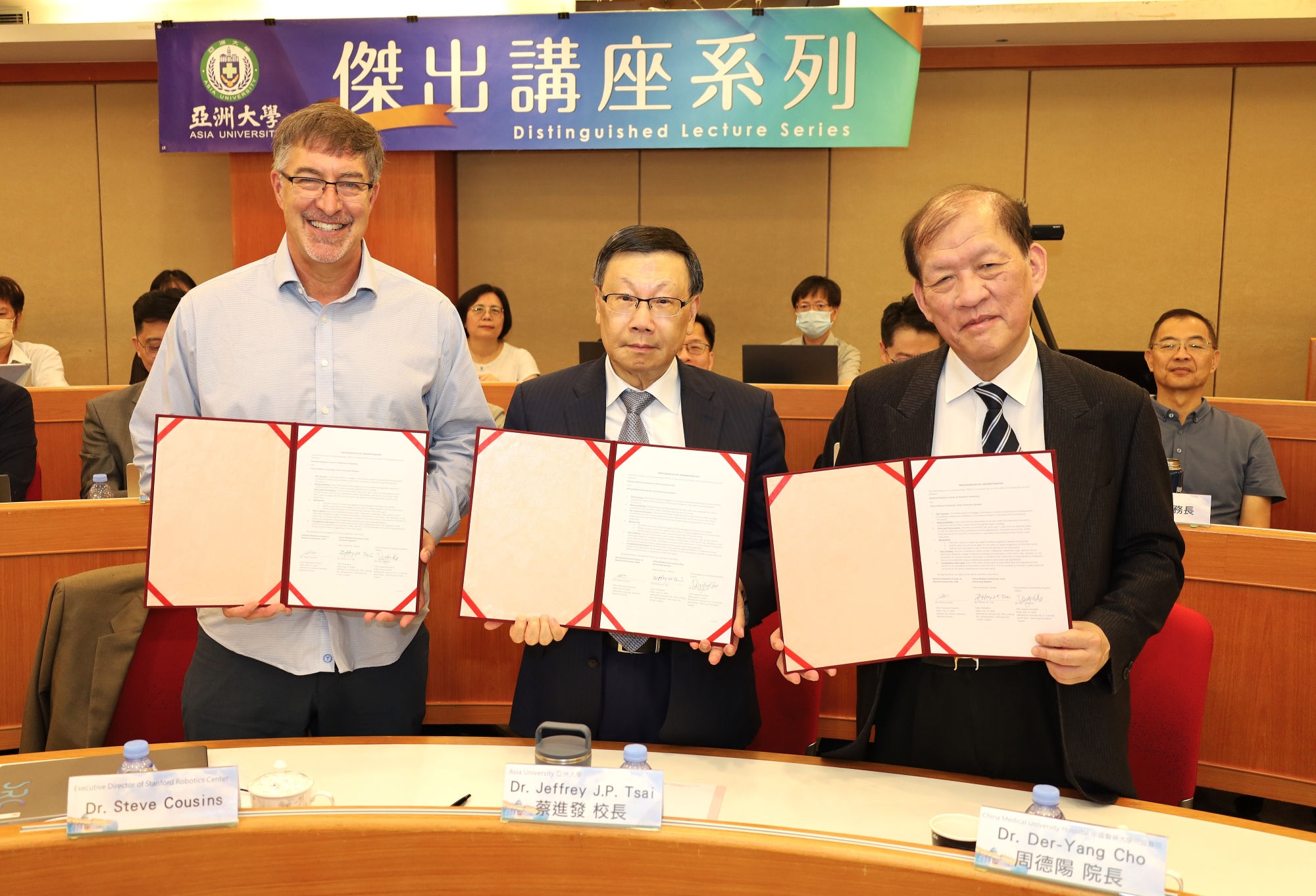
Representatives of the CMU-AU System and the Stanford Robotics Center present the signed MoU.