

Asia University Expands U.S. Partnerships with Arizona Western College to Advance Semiconductor Talent Development
Asia University (AU) is expanding its higher education partnerships in the United States through a new agreement with Arizona Western College (AWC), strengthening Taiwan–U.S. collaboration in semiconductor and emerging technology education
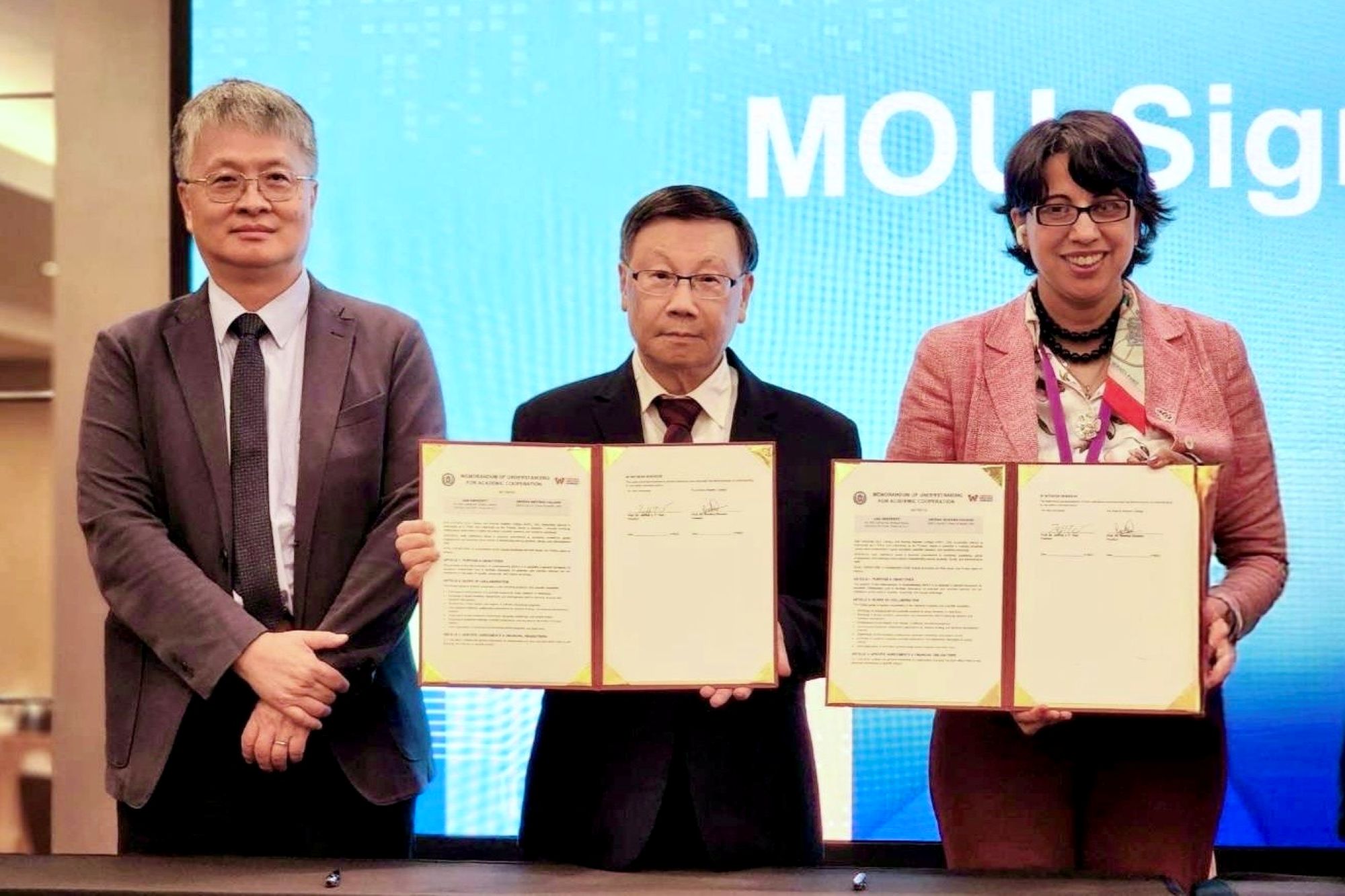
Taiwan Deputy Minister of Education Kuo-Wei Liu (left), Asia University President Jeffrey J. P. Tsai (center), and Arizona Western College President Dr. Reetika Dhawan pose for a photo following the signing of a Memorandum of Understanding.
AU President Jeffrey J. P. Tsai and AWC President Dr. Reetika Dhawan signed a Memorandum of Understanding (MOU) in Hsinchu, Taiwan, establishing a five-year framework for cooperation in semiconductors, artificial intelligence, information technology, and related fields.
The partnership will support student and faculty exchanges, professional training programs, internships, joint research, curriculum collaboration, and joint or dual-degree opportunities. The two institutions also plan to develop short-term academic programs and international learning experiences that connect classroom learning with the needs of the global technology industry.
The signing took place during a visit to Taiwan by American Association of State Colleges and Universities (AASCU) President Charles Welch and a delegation of 15 U.S. higher education leaders. The delegation participated in the “Freedom 250: Semiconductor Workforce Development Summit,” organized by the American Institute in Taiwan (AIT), and visited universities and industry partners to learn more about Taiwan’s semiconductor workforce development ecosystem.
Asia University was among the key institutions included in the delegation’s itinerary, showcasing Taiwan’s integrated approach to semiconductor education through academic curricula, laboratories, simulated production environments, and university–industry collaboration.
The new partnership builds on the Taiwan–U.S. Semiconductor Higher Education Exchange held in Orlando, Florida, on May 27. During the event, the Foundation for International Cooperation in Higher Education of Taiwan (FICHET), representing Taiwan’s Ministry of Education, and AASCU signed a Letter of Intent to advance cooperation under the Taiwan–U.S. Semiconductor Education Alliance.
Asia University was represented at the Orlando meeting by Vice President Jung-Jie Huang, Deputy Dean of International Affairs Yi-Chi Chen, and Yu-Ming Peng, Associate Professor in the Department of Computer Science and Information Engineering and the Bachelor Program in Semiconductor Engineering.
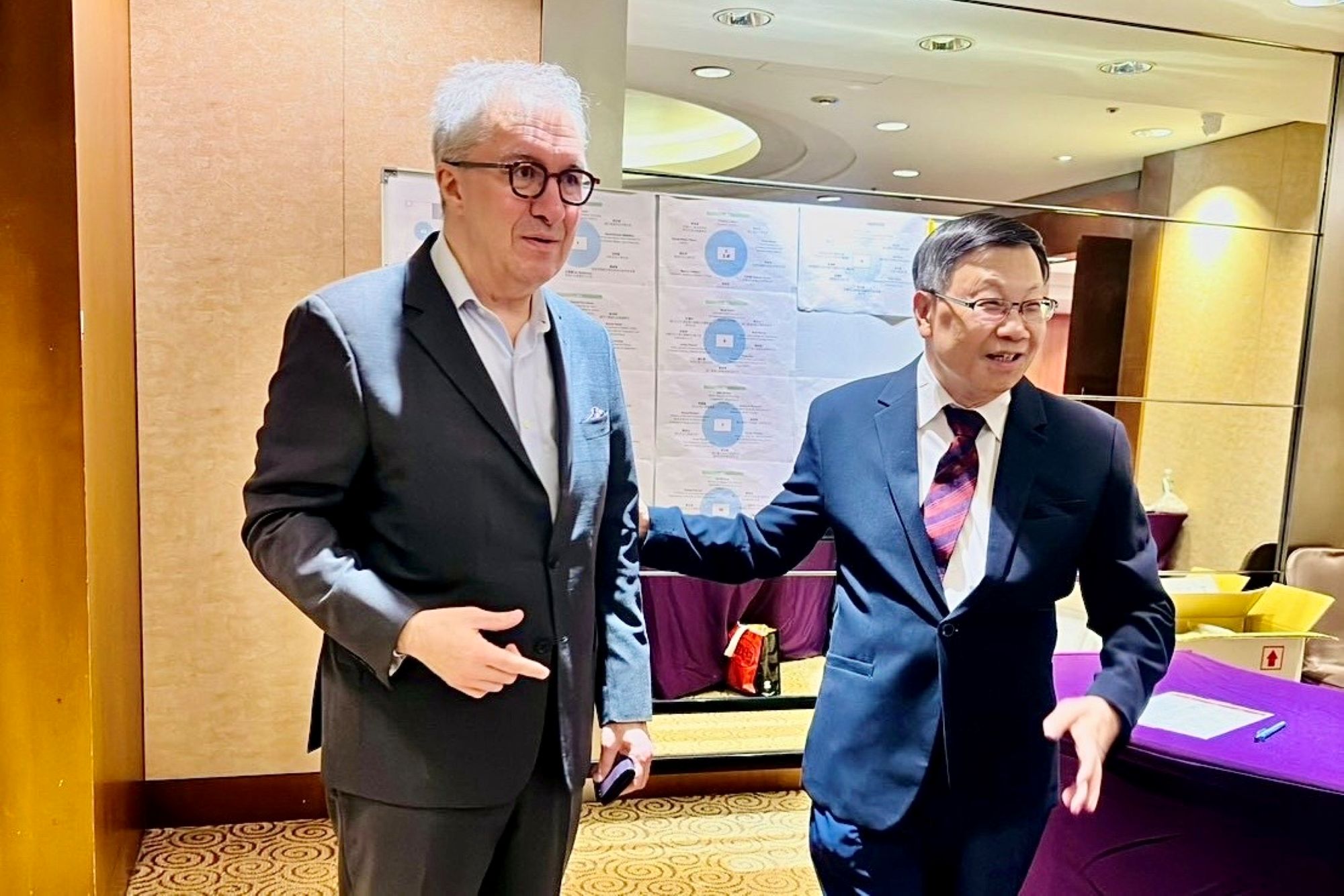
Asia University President Jeffrey J. P. Tsai (right) exchanges views with members of the U.S. delegation, strengthening ties in Taiwan–U.S. higher education and semiconductor talent development.
Taiwan Minister of Education Ying-yao Cheng emphasized that talent development is fundamental to national progress, social development, and sustainable economic growth. Through international education partnerships, he said, Taiwan and the United States can create more opportunities for young people to develop professional knowledge, technical skills, creativity, and adaptability.
The Ministry of Education also aims to welcome more U.S. students to Taiwan to study semiconductor technologies while expanding opportunities for Taiwanese students to pursue artificial intelligence and other emerging technologies in the United States.
Located in Yuma, Arizona, Arizona Western College is known for its commitment to higher education, career and technical education, and community development. Under the MOU, AU and AWC will explore undergraduate and graduate student exchanges, study and internship opportunities, faculty and staff exchanges, joint and dual-degree programs, curriculum articulation, collaborative research, technology development, international conferences, workshops, short-term programs, and cultural activities.
The partnership will also draw on Asia University’s strengths in semiconductors, artificial intelligence, information technology, and smart manufacturing. Future programs are expected to give students broader exposure to the semiconductor value chain, from materials and manufacturing processes to packaging, testing, and AI applications.
"Internationalization is essential to preparing students for the future, and semiconductors and AI are among the most important areas connecting Taiwan’s higher education with the world," President Tsai said.
"Building on our Bachelor Program in Semiconductor Engineering and the Research Center for AI Semiconductor Design and Sustainable Manufacturing, Asia University will continue to integrate industry-based learning, international education, and cross-institutional collaboration to cultivate technology professionals with strong expertise, interdisciplinary capabilities, and a global perspective."
The MOU will remain in effect for five years. AU and AWC will develop additional agreements for specific initiatives and gradually implement student and faculty mobility, curriculum collaboration, internships, and joint research projects.
The partnership represents another step in transforming the Taiwan–U.S. Semiconductor Education Alliance from a policy framework into concrete institutional collaboration. It also further expands Asia University’s academic network in the United States and creates new opportunities for preparing the next generation of semiconductor and technology talent.
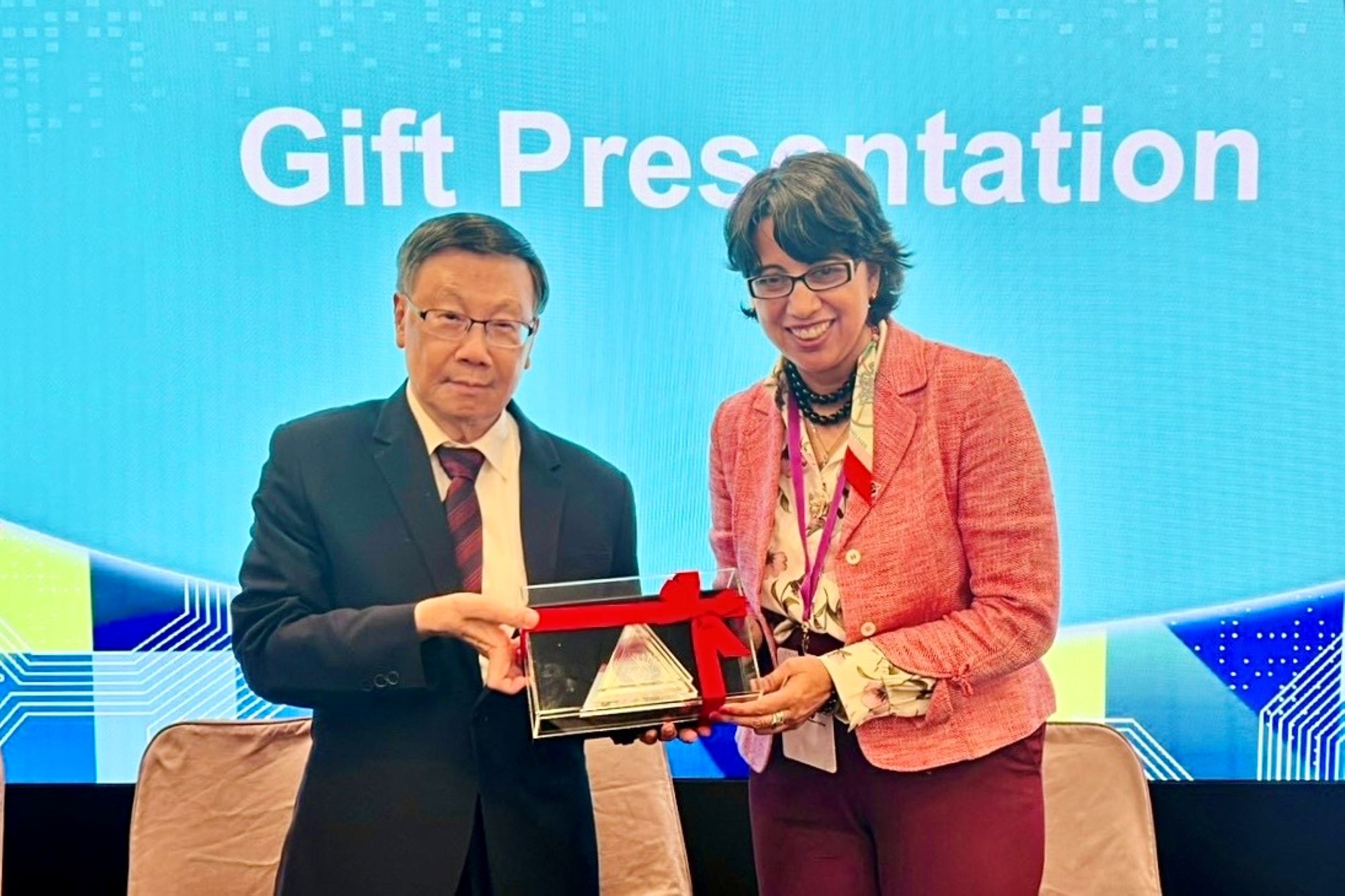
Asia University President Jeffrey J. P. Tsai presents a commemorative gift to Arizona Western College President Dr. Reetika Dhawan, marking a new chapter in the partnership between the two institutions.