
Asia University Connects Semiconductor Talent Pipeline Across the Pacific with 11 U.S. Universities in Nine States
AASCU Delegation Visits SPIL and AU’s Hands-on Semiconductor Facilities, Exploring Faculty Exchange, Joint Curriculum Development, and Industry Internships
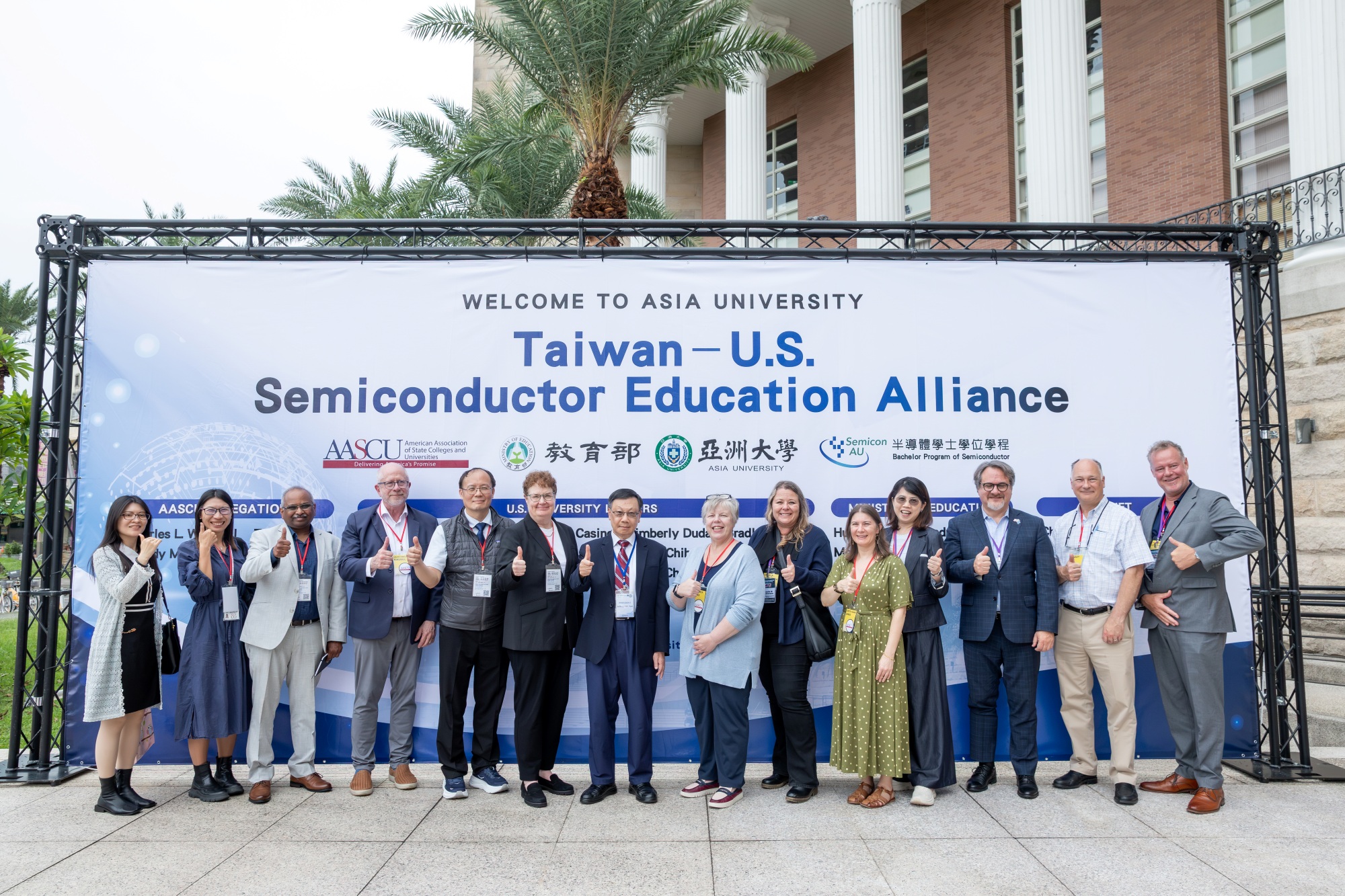
The AASCU delegation poses for a group photo with Asia University President Jeffrey J. P. Tsai (center) , marking a new chapter in Taiwan–U.S. collaboration in semiconductor education.
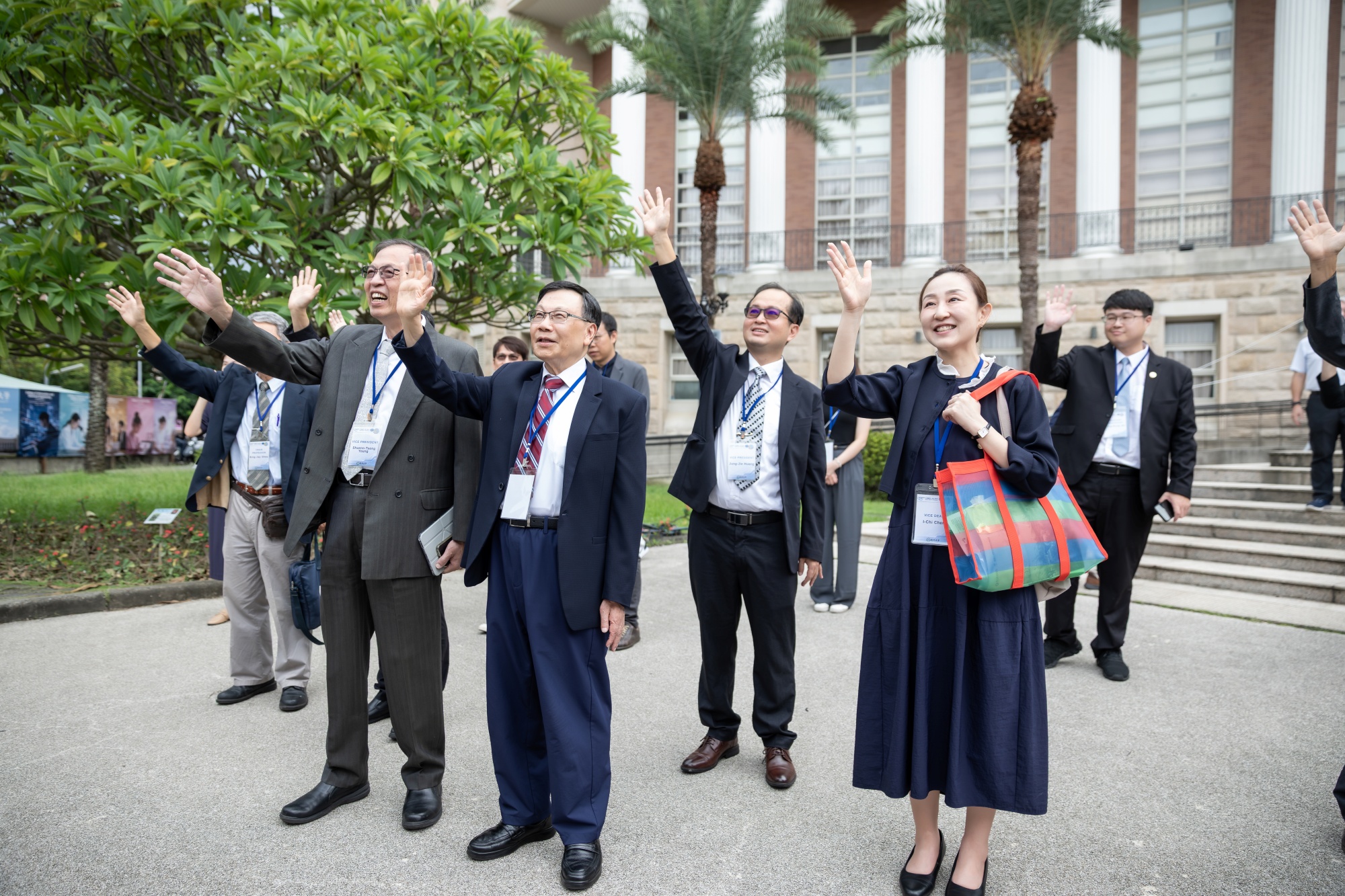
President Jeffrey J. P. Tsai leads the Asia University delegation in extending a distinguished welcome and farewell to the visiting AASCU delegation.
Global semiconductor competition is expanding beyond technology to encompass talent development and higher education collaboration. On September 4, Asia University (AU) hosted a delegation from the American Association of State Colleges and Universities (AASCU) under the Taiwan-U.S. Semiconductor Education Alliance. Senior higher education leaders and scholars from 11 universities across nine U.S. states visited Taiwan to gain a closer understanding of the strong connection between the semiconductor industry and university-based talent development. The delegation toured AU’s industry partner, Siliconware Precision Industries Co., Ltd. (SPIL), as well as AU’s semiconductor packaging pilot production line and measurement and fabrication laboratories. Discussions focused on faculty exchange, research and teaching collaboration, student mobility, and industry internships, with the aim of moving Taiwan-U.S. semiconductor education cooperation from institutional visits toward joint talent cultivation.
AU and SPIL have already established a strong foundation for semiconductor talent development. Together, they created the first hands-on semiconductor packaging pilot production platform within Taiwan’s higher education system and launched the “SPIL Program: Practical Training in IC Packaging and Testing Equipment.” The program enables students to strengthen their practical skills on campus while building a direct bridge to industry needs and future careers. By visiting both SPIL’s industrial facilities and AU’s semiconductor teaching and research environments, the U.S. delegation was able to see firsthand how Taiwanese universities integrate industry resources into talent cultivation.
Dr. Teresa Brown, Vice President for Academic Innovation and Transformation at AASCU, said that a week of visits to Taiwanese universities and industry partners revealed extensive opportunities for Taiwan-U.S. collaboration. In addition to faculty exchange and joint research and teaching, she noted that institutions could further share curriculum design and teaching practices, arrange internships for U.S. students at Taiwanese companies, and create opportunities for students to study at universities equipped with advanced facilities. She emphasized that meeting the global demand for semiconductor talent requires more collaboration, rather than competition. The semiconductor industry has already demonstrated the value of partnership, she said, and higher education can build the same kind of collaborative relationships.

The AASCU delegation visits Asia University and poses for a commemorative group photo with the University team.

The AASCU delegation visits Asia University, where President Jeffrey J. P. Tsai presents a commemorative wafer to AASCU Vice President Teresa Brown。
Brown was particularly impressed by the close ties between universities and industry in Taiwan. She observed that many universities are located near science parks or industry clusters, making it easier for academic institutions and companies to work together and providing students with opportunities to gain practical experience through internships. She suggested that U.S. universities could learn from Taiwan’s experience by creating more opportunities for industry-university talent development, including paid internships. Taiwan’s universities, she added, also offer advanced teaching and laboratory facilities that could support future study and training opportunities for U.S. students in Taiwan.
AU President Jeffrey J. P. Tsai said that, while the delegation had visited a number of Taiwanese universities and semiconductor companies, AU hoped its international partners would see more than its strengths in semiconductors. “We also want them to experience the role of art and the humanities on our campus,” he said. AU continues to invest in AI, semiconductors, and interdisciplinary talent development and, through the China Medical University–Asia University System, connects its educational mission with medical and research resources. The campus is home to the Asia University Museum of Modern Art designed by Tadao Ando, and a new museum designed by Frank Gehry is also planned. AU has recruited faculty with experience at leading international universities and technology companies, while a number of its scholars have been recognized among Stanford University’s World’s Top 2% Scientists. President Tsai said the University seeks to cultivate students with both professional expertise and interdisciplinary perspectives in an environment where technology, industry, medicine, art, and the humanities intersect.
In her remarks, Brown noted that the delegation brought together representatives from 11 universities in nine U.S. states with a shared goal: to identify concrete ways to collaborate in response to the semiconductor industry’s growing workforce needs. AASCU is a major U.S. higher education association representing more than 500 regional public colleges, universities, and university systems nationwide, and it has long supported innovation in higher education, international exchange, and inter-institutional collaboration. During the visit, participants discussed potential short-term study programs, semester exchanges, industry internships, and other forms of cooperation, while AU showcased its semiconductor packaging pilot production line and measurement and fabrication laboratories.
President Tsai said AU will continue to deepen its partnerships with SPIL and other industry partners while connecting with the teaching, research, and international education resources of U.S. universities. Through two-way student mobility, faculty and research collaboration, and industry internships, AU aims to advance Taiwan-U.S. semiconductor education cooperation toward sustained and substantive joint talent development.
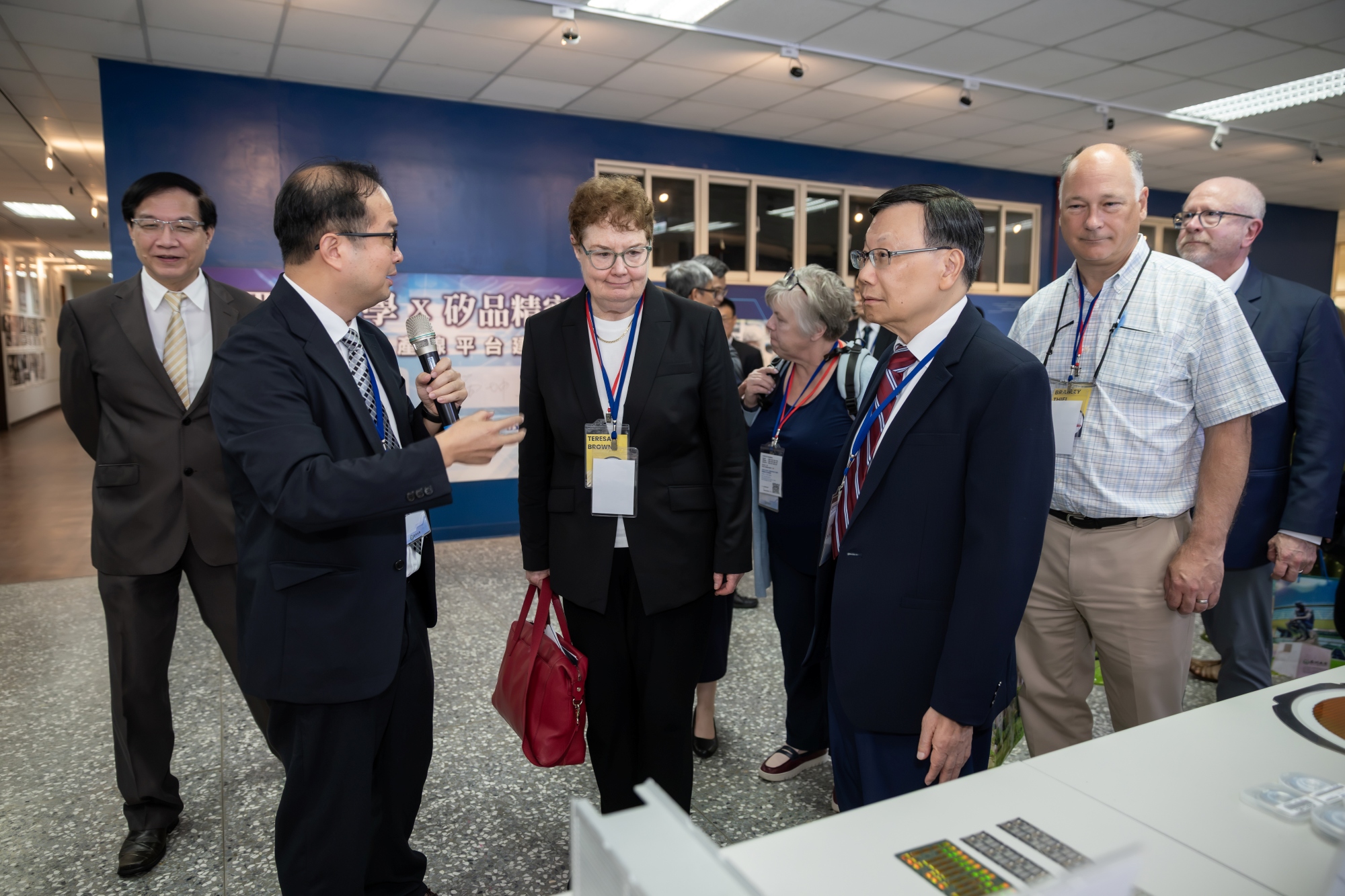
U.S. higher education representatives tour Asia University’s semiconductor research laboratories, attentively learning about semiconductor processing technologies and advanced teaching facilities.

The AASCU delegation joins the Asia University team for a forum at Harvard Hall, hosted personally by President Jeffrey J. P. Tsai