
Asia University President Jeffrey J. P. Tsai Ranks Among World's Top 0.45% in 2026 ScholarGPS Lifetime Rankings
His Outstanding Academic Achievements in AI and Biomedical Research Highlight Asia University's Advances in Artificial Intelligence, Smart Healthcare, Robotics, and Quantum Technology
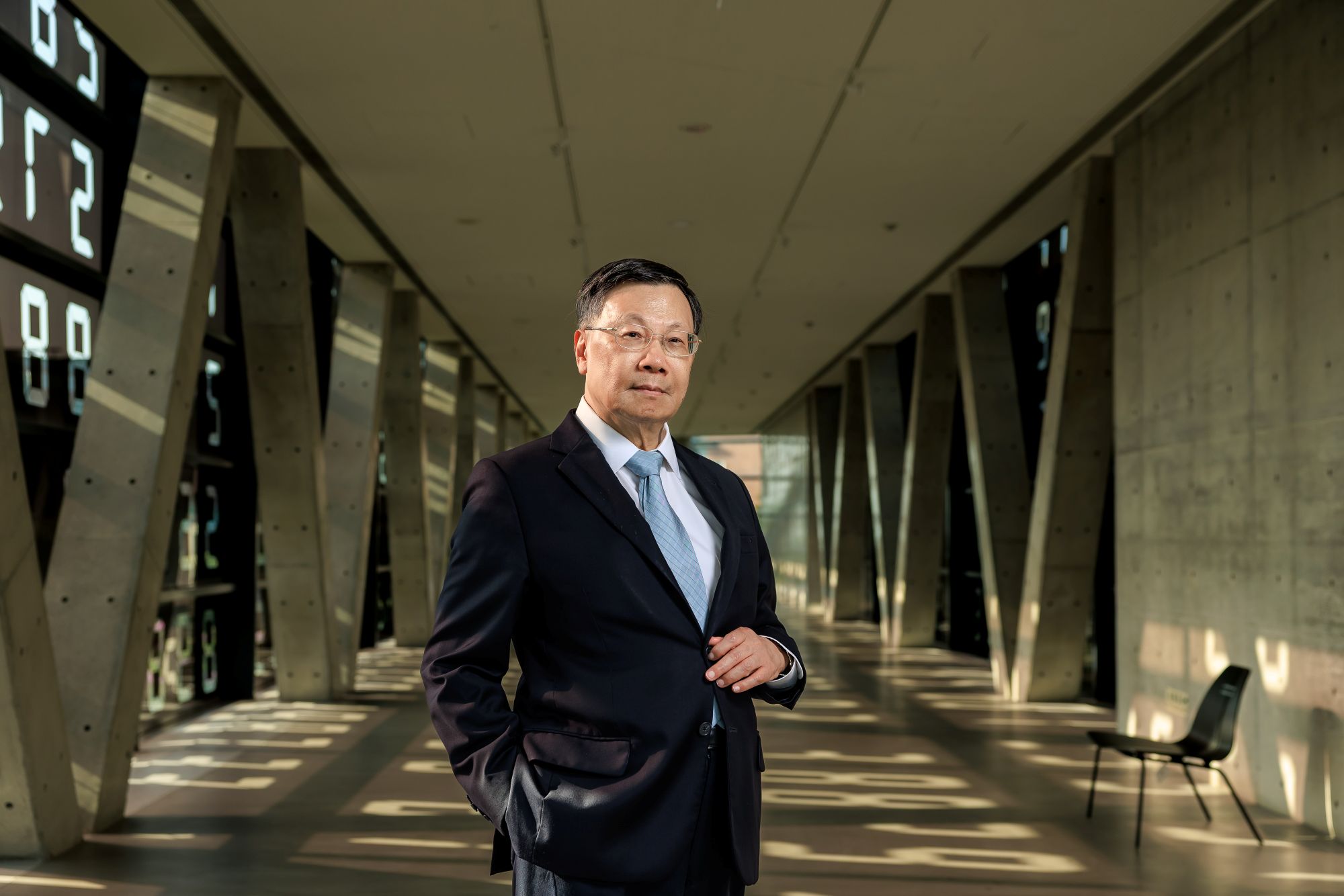
Asia University President Jeffrey J. P. Tsai ranks among the world’s top 0.45% of scholars in the 2026 ScholarGPS lifetime rankings, highlighting his academic excellence and global impact.
Asia University President and Chair Professor Jeffrey J. P. Tsai has been ranked among the world's top 0.45% of scholars in the 2026 lifetime academic rankings released by ScholarGPS, an internationally recognized academic analytics and ranking organization. His ranking places him within the top 0.5% threshold associated with ScholarGPS's “Top Scholar – Lifetime” designation, reflecting his longstanding contributions to artificial intelligence (AI), computer science, and interdisciplinary biomedical research. This outstanding ranking result also marks another significant milestone in Asia University's growing international academic reputation.
ScholarGPS is a leading platform for evaluating scholarly impact and research excellence. Its comprehensive database covers more than 200 million academic publications and 30 million researchers worldwide, spanning 177 disciplines across 14 broad academic fields. Scholars are evaluated based on research productivity, citation impact, and scholarly quality, using indicators such as publication counts, citation numbers, and the h-index. The platform identifies the top 0.5% of researchers worldwide as Top Scholars, recognizing their outstanding academic achievements and contributions to their respective fields. Its rankings assess both lifetime scholarly accomplishments and research performance over the past five years, providing an important international benchmark for academic excellence.
According to the 2026 ScholarGPS lifetime rankings, President Tsai demonstrated exceptional performance across several core areas of computer science and artificial intelligence. He ranked among the world's top 0.23% in Machine Learning, top 0.39% in Intrusion Detection Systems, top 0.47% in Bioinformatics, and top 0.48% in Software Engineering. These achievements reflect the breadth and depth of his research contributions across AI algorithms, cybersecurity, software engineering, and biomedical informatics, highlighting his sustained academic influence in multiple fields.
Throughout his distinguished academic career, President Tsai has conducted pioneering research in artificial intelligence, knowledge-based software engineering, intelligent agent systems, distributed real-time systems, and bioinformatics. His research contributions span intelligent systems design, software verification, cybersecurity, machine learning, and precision medicine. Beyond his individual scholarly achievements, he has actively promoted interdisciplinary research collaborations, extending AI and information technologies into healthcare and industrial applications. These efforts have helped establish a strong foundation for Asia University's development in artificial intelligence and smart healthcare.
Under President Tsai's leadership, Asia University has actively pursued interdisciplinary integration of AI, semiconductor technology, and smart healthcare, bringing together expertise in artificial intelligence, computer science, biomedical engineering, and health sciences. The University has developed a comprehensive framework connecting advanced research, technological innovation, international collaboration, and industry-oriented talent development. In partnership with global semiconductor leader AMD, Asia University established the AMD Logic and Computing Laboratory and launched seven innovative research projects. These initiatives cover AI-assisted medical diagnosis, biomedical knowledge graphs, drug repurposing, coronary artery disease analysis, quantum security, and next-generation deep learning models. By leveraging high-performance computing technologies, the University aims to advance innovative applications of AI in precision medicine and biomedical computing.
Asia University has also strengthened its international partnerships in smart healthcare and robotics. In March 2026, President Tsai led a delegation from Asia University and China Medical University Hospital to the Stanford Robotics Center in the United States, where discussions focused on generative AI, embodied AI, and advanced healthcare robotics. In July of the same year, Asia University, China Medical University Hospital, and the Stanford Robotics Center further formalized their collaboration through a Memorandum of Understanding (MoU). The partnership aims to advance medical robotics, clinical validation, international joint research, and talent exchange. By combining world-class robotics technologies with Taiwan's strengths in healthcare, the collaboration seeks to develop intelligent robotic systems capable of assisting healthcare professionals and improving the quality of patient care.
Asia University has continued to expand its global research network by hosting major international conferences in artificial intelligence and emerging technologies. In 2025, the University organized the International Symposium on AI × Medicine, Health, and Care (AIxMHC 2025), bringing together researchers and experts from 17 countries and regions to explore AI applications in precision medicine, clinical decision-making, and healthcare innovation.
In 2026, the University hosted the International Symposium on Humanoid Robotics and Sovereign AI for Future Living, focusing on advances in humanoid robots, embodied intelligence, and human–robot collaboration. It also organized the Quantum AI Symposium, connecting international expertise in quantum technologies and life sciences while exploring the future of next-generation computing and intelligent healthcare.
Looking ahead, Asia University will host the 2026 International Physical AI & Robotics Symposium on December 3–4, bringing together leading scholars and industry experts from Stanford University, the University of California, Los Angeles (UCLA), Osaka University, and other prominent institutions. The symposium will explore cutting-edge developments in Physical AI, intelligent robotics, autonomous systems, and smart healthcare. By promoting the transition of AI from digital environments to real-world applications, the event aims to deepen international research and industry collaboration while demonstrating Asia University's commitment to advancing the next generation of artificial intelligence technologies.
President Tsai is also a Professor Emeritus at the University of Illinois, a Fellow of the American Association for the Advancement of Science (AAAS), and a Fellow of the Institute of Electrical and Electronics Engineers (IEEE). He was additionally included in the 2026 Stanford University–Elsevier World's Top 2% Scientists list for career-long scientific impact, further recognizing his outstanding contributions to artificial intelligence research.
His outstanding performance in the ScholarGPS lifetime rankings not only highlights his distinguished scholarly achievements and enduring international influence but also reflects his dedication to translating research excellence into institutional innovation and development. Building upon its strong academic foundation, Asia University will continue to harness emerging technologies to address societal needs, strengthen international partnerships, and pursue its vision of becoming a world-class university.