

Asia University Takes the IEEE International Stage as President Jeffrey J.P. Tsai Shares His Vision for a University of Intelligence and Warmth
AI can generate answers, but universities must cultivate people who can ask better questions
Source: IEEE Nanotechnology Magazine: https://doi.org/10.1109/MNANO.2026.3680117
Artificial intelligence is reshaping the global order at unprecedented speed and redefining the mission of higher education. In its June 2026 issue, IEEE Nanotechnology Magazine published a feature interview with Professor Jeffrey J.P. Tsai, President of Asia University, under the title "Mr. Pioneering Duality of Digital Intelligence and Human Wisdom in Taiwan." The article explores how President Tsai has led Asia University over the past 25 years through forward-looking governance, international engagement, strategic development in AI and semiconductor research, and a deep commitment to humanistic education. Together, these efforts have shaped Asia University into a modern institution that integrates digital intelligence with human wisdom, setting a new example for higher education in Taiwan in the AI era.
Facing an age in which “intelligence is no longer scarce, yet wisdom may be,” President Tsai emphasized in the interview that the essential task of university education is no longer merely to teach students how to use technological tools. Rather, education must return to the essence of whole-person development: cultivating students’ ability to make judgments under uncertainty, continue learning amid rapid change, and make responsible, compassionate, and meaningful decisions in real-world situations where information is incomplete and values may conflict.
President Tsai noted that the more powerful AI becomes, the more precious the human capacities that technology cannot replace will be. The qualities that make us human do not disappear with the rise of machines; instead, they become even more visible in the AI era. When answers can be generated automatically, the more difficult and important work is learning how to live with questions, understand the roots of one’s actions and emotions, examine choices through the long arc of history and culture, and make value-based judgments in contexts where evidence is partial and the stakes are real.
For this reason, humanistic capacities are no longer supplementary refinements in education, but essential abilities for public life. Listening, communication, trust-building, maintaining dignity amid disagreement, and working with others toward shared meaning are indispensable qualities in the AI era. President Tsai pointed out that kindness, empathy, and the willingness to help are not sentimental moral decorations, but important foundations that enable civilization to move forward with stability.
From a Watermelon Field: The Founding Vision of a Modern University
The interview looks back to 25 years ago, when Asia University began on a piece of land once locally known as a watermelon field. From this humble beginning, Asia University has gradually developed into an institution recognized for sound governance, research capacity, global outlook, and a distinctive humanistic atmosphere.
President Tsai said that, at the time of founding, what mattered most to him was not "adding one more school," but “creating a better choice” for young people in Taiwan. He once said, “Taiwan does not lack universities. It lacks a very modern university.” By this, he meant that Asia University should provide an open, forward-looking learning environment that connects swiftly with the world, while holding itself to higher standards and taking long-term responsibility for talent cultivation.
He further noted that Asia University chose a distinctive and international path from the very beginning. “Excellence” is not a slogan, but something that must be realized in everyday systems and actions: building a culture of quality, recruiting and supporting outstanding faculty, developing research capacity, and providing students with a more complete learning experience. Although the founding years had no historical legacy to rely on and no ready-made system to copy, the advantage of a young university lies precisely in its ability to innovate more boldly, act more quickly, and turn ideals into reality step by step. The interview also notes that Asia University has established an International Advisory Board, which regularly provides strategic perspectives and helps broaden the university’s global vision. This international orientation has gradually become an important characteristic of Asia University’s students and graduates, as well as a foundation for the university’s continued global development.
Three Milestones Over 25 Years: Building from Scratch, Advancing Through Research, and Integrating Humanities with Technology
Reflecting on Asia University’s development over the past 25 years, President Tsai summarized its growth at three levels. The first is “building from scratch.” When Asia University was founded, the campus site had once been watermelon and sugarcane fields, and Taiwan was still recovering from the devastating 921 Earthquake. Establishing a new university at that time was anything but easy. In the early years, Asia University gradually built the essentials a university must have: sound systems, outstanding faculty, a complete campus, an administrative team, and research capacity. President Tsai emphasized that the key was not only constructing buildings, but also forming a founding team capable of operating a large educational organization with clear goals, discipline, and strong execution, allowing the university to function steadily and develop its own campus culture.
The second level is “rapid advancement through research and industry linkages.” Once the foundations became stable, Asia University actively strengthened international engagement and research capacity, while building mechanisms to translate research into real-world impact. In recent years, the university has established several forward-looking research centers, including the AI and Quantum Research Center, the AI Semiconductor Design and Sustainable Manufacturing Research Center, the Precision Health Research Center, the Center for Prevention and Treatment of Internet Addiction, and the Research Center for Information Security. These centers are not merely research platforms; they serve as engines for technology, healthcare, interdisciplinary collaboration, and practical application.
Asia University has also expanded its capacity in smart healthcare and high-performance computing through partnerships with leading international enterprises. For example, in collaboration with AMD, the university established the AMD Logic and Computing Lab and launched seven innovation initiatives spanning AI and biomedical computing. These include biomedical knowledge graphs and drug repurposing, AI diagnosis for renal tumors, an AI analytics platform for coronary artery disease, disease diagnosis and treatment analytics, semiconductor and AI talent cultivation, quantum-safe security and AI applications, and optimization of next-generation deep learning models.
In smart healthcare, President Tsai pointed out that Asia University’s advantage lies in the fact that research does not remain only in the laboratory, but can be connected to clinical settings. Through the China Medical University and Asia University system and its affiliated medical resources, the university has stable environments for data, validation, and deployment. One representative achievement is the AI Peritoneal Dialysis Monitoring System, which integrates AI image recognition, deep learning, and a cloud platform to support remote care for home peritoneal dialysis patients. The system helps medical teams assess the risk of catheter exit-site infection in a timely manner, strengthening early warning and patient safety. It also received the National Innovation Award in 2024.
The third level is "humanities and technology in parallel." President Tsai stated that a university that pursues only hard power may be effective in the short term, but may not go far over time. Education must ultimately return to the human being, including character, responsibility, aesthetic sensibility, and empathy. For this reason, Asia University has continued to invest in people-centered institutions and cultural spaces. The Asia University Museum of Modern Art, designed by renowned Japanese architect Tadao Ando, as well as the establishment of Asia University Hospital and the Veterinary Hospital, are not merely milestones of institutional expansion. They embody the educational philosophy of “people at the center, technology as a means.”
Semiconductors, Nanotechnology, and AI: Forward-Looking Strategies for the Needs of the Era
The interview specifically points out that nanotechnology is a core enabler of rapid AI development in the 21st century. Asia University has strong research and development capacity in AI through its College of Information and Electrical Engineering, particularly in software and system-level architecture. At the same time, the university offers departments and degree programs related to artificial intelligence and semiconductors, attracting both domestic and international students.
In addition, Asia University established the AI Semiconductor Design and Sustainable Manufacturing Research Center in 2025, with nanometer-scale fabrication and advanced packaging as key areas of emphasis. This strategic development responds to global trends in semiconductors, AI, and sustainable manufacturing, and demonstrates Asia University’s determination to closely connect research, talent cultivation, and industry needs.
Rankings Are Not the Goal, but International Recognition of Substantive Effort
Asia University has achieved multiple breakthroughs in global academic rankings in recent years. In response, President Tsai said that for a young university, rankings do serve a function, because they provide an international language through which the world can more quickly understand the university’s efforts and achievements. However, rankings should never be the ultimate goal of a university. The real goals remain teaching quality, research capacity, and talent cultivation.
President Tsai noted that when institutional substance is solid, external recognition tends to follow. In the Times Higher Education World University Rankings 2026, Asia University was ranked in the 401–500 band globally and tied for third in Taiwan, reflecting the university’s steady progress in research quality, industry engagement, and international outlook. In the 2026 World University Rankings by Subject, Asia University also demonstrated strong performance in Computer Science, Business and Economics, Medical and Health, and Life Sciences, and ranked first among Taiwan’s private non-medical universities in several subject areas.
Teaching, Research, and Cultural Life: Integrating the Three Pillars of a University
The interview cites the German philosopher Karl Jaspers’ view that a genuine university should encompass academic teaching, scientific research, and creative cultural life. President Tsai’s educational philosophy closely aligns with this ideal. He does not view the university as merely a place for transmitting knowledge. Rather, he hopes to ground talent cultivation through teaching, advance civilization through research, and nourish students’ inner lives through culture, so that the campus becomes a complete educational ecosystem.
President Tsai said that the most decisive driving forces behind Asia University’s progress over the past 25 years have been "a shared direction” and “sustained action." Teaching must cultivate students well; research must build academic strength; and cultural life must give the campus spirit and character. These three dimensions are not separate tracks, but mutually supportive. Research elevates the university’s height, cultural life nurtures its depth, and teaching transforms both height and depth into each student’s lived educational experience.
He regards university governance as an integrated project: beginning with vision, implementing strategy, ensuring sustainability through systems, and finally using culture to ensure that systems are not merely cold regulations, but a direction genuinely shared by faculty and students. When teaching, research, and cultural life support one another, the growth of a university is not simply a matter of becoming larger, but of becoming more complete.
Whole-Person Education: Learning to Be Human Before Learning to Do
In an era of rapid technological advancement, the core mission of university education becomes even clearer: to cultivate people with judgment, empathy, responsibility, and aesthetic sensibility. President Tsai has long promoted aesthetic education, the Three-Qualities College, and a culture of service, repeatedly emphasizing the importance of "learning to be human before learning to do."
He stated that the humanities are not decoration, but foundation. In the AI era, the most important capacities are often not isolated technical skills, but qualities that accompany a person throughout life: an aesthetic attitude, creativity, cross-disciplinary thinking, humanistic care, empathy, and the habit of lifelong self-learning.
Asia University’s Three-Qualities College promotes "character in being, quality in doing, and taste in living," while shaping a service-oriented campus culture. President Tsai hopes that when students leave the university, they carry not only skills, but also a way of facing the world: capable yet warm, able to pursue professional excellence while remaining willing to contribute what they have learned to society.
Speaking about talent cultivation in the AI era, President Tsai reminded students not to limit themselves to a single skill, but to become people who can keep learning, integrate across fields, and collaborate with others. Asia University also strives to create sufficient space and support for each student to find their own path to the future, rather than placing everyone into a single definition of success. He emphasized that AI will accelerate change, but it will not replace genuine judgment and responsibility. Students may use tools, but they must know why they use them, what they use them for, and to whom they are accountable.
From the Classroom to Industry: Learning in the Real World
Asia University has translated this philosophy of talent cultivation into concrete learning pathways that connect classroom learning with industry needs. For example, the university has partnered with Siliconware Precision Industries Co., Ltd. (SPIL), a global leader in semiconductor packaging and testing, to cultivate next-generation semiconductor talent. Together, they launched the SPIL Special Program: Practical Training in IC Packaging and Testing Equipment, supported by related semiconductor international linkage and talent cultivation initiatives under Taiwan’s Industrial Development Administration, Ministry of Economic Affairs. Upon completing the program, students also receive career and job-matching support to help them transition smoothly into the workforce.
At the same time, Asia University has actively promoted hands-on AI education. Through NVIDIA Deep Learning Institute practicums and the AWS Cloud Innovation Academy, students have earned international certifications in AI and cloud computing. In recent years, Asia University students have obtained more than 270 international certifications, demonstrating the university’s concrete achievements in cultivating applied AI and cloud computing talent. President Tsai said that no certificate is the final goal. More importantly, he hopes students remain curious and optimistic, and are willing to continuously renew themselves amid change. When people can maintain clear values and warmth in a rapidly changing world, they are more likely to go far and become a source of strength for others.
The Museum and the Nobel Laureate Forum: Bringing Culture and World-Class Dialogue into Daily Campus Life
The interview points out that bringing art and dialogue with world-class thinkers into everyday campus life is not an optional bonus in education, but an important way to cultivate students’ sense of scale and perspective. Asia University has shaped its cultural life through the Tadao Ando-designed Museum of Modern Art and created opportunities for students to engage face-to-face with leading scholars through the Nobel Laureate Forum.
Speaking about the establishment of the Asia University Museum of Modern Art, President Tsai said that a university should not be merely a place for classes; it should provide students with a complete cultural life. The museum is not decoration, but education. It enables students to live with art, learn to see, and cultivate aesthetic sensibility and judgment. When students pause to look at a work of art, they are also practicing deeper thinking and finer feeling.
The museum also serves as an interdisciplinary platform where art, technology, humanity, and society meet. It reminds the university that progress should not focus only on efficiency and competition, but also preserve inner composure and cultural depth. President Tsai pointed out that this openness itself is an educational advantage for cultivating transdisciplinary intelligence. As society faces more complex problems that cannot be solved by any single discipline, universities must cultivate students’ habits of interdisciplinary thinking through everyday environments.
Discussing the Nobel Laureate Forum, President Tsai said that the original intention was to help students learn from the life stories and research journeys of world-class scholars—the passion for knowledge, the perseverance of long-term commitment, and the courage not to give up when facing uncertainty. He believes that the core of the Nobel Laureate Forum is an education in excellence. Excellence is not a trophy, but a disciplined way of thinking and living. The forum also reflects the path Asia University has chosen over the past 25 years: continually pursuing higher standards and continuing to move forward in that direction.
President Tsai hopes the forum teaches students to “place themselves in the world.” When students encounter great minds in person, they come to understand that excellence is not simply intelligence, but a way of thinking and a sense of questions accumulated over time. Students are not merely listening to lectures; they are absorbing depth through real dialogue and transforming that depth into the capacity to face a changing world.
What delights him most, President Tsai shared, is seeing students raise questions that demonstrate global awareness and public concern when interacting with Nobel laureates or world-class scholars. For example, students have reflected on how to avoid becoming passive users of AI, and how to think about technology governance, ethics, and public responsibility. When students are able to raise such questions, they have taken a crucial step: transforming personal uncertainty into public issues worthy of discussion. This change is not merely short-term “knowing more,” but a long-term process of learning how to frame questions, probe further, and situate one’s thinking within a broader global context.

President Jeffrey J. P. Tsai chaired a Nobel Laureate Forum featuring Professor Thomas C. Südhof, recipient of the 2013 Nobel Prize in Physiology or Medicine, engaging in an in-depth discussion on the challenges facing early-career researchers.
From a Small Fishing Village in Chiayi to Founding a University: Education Can Change Individuals and Society
The interview concludes by returning to President Tsai’s personal life journey. From a small fishing village in Chiayi City, he went on to pursue a Ph.D. in Electrical Engineering and Computer Science in the United States. He previously served as a professor and laboratory director at the University of Illinois Chicago, was a visiting professor at Stanford University, and is an IEEE Fellow. After returning to Taiwan, he became the founding president of Asia University and later resumed the presidency, leading the institution through vision-driven and system-oriented governance.
President Tsai said that he is deeply grateful for his academic and research journey, because it taught him that education can change the path of an individual and the future of a society. Therefore, when he devoted himself to higher education and university leadership, what he carried in his heart was not to make the university bigger, but to make it better. His experience in the international academic community helped him understand the importance of systems, quality, and research culture. Returning to Taiwan to found a university made him realize even more clearly that for an institution to go far, it must care for professionalism, character, and cultural life together, so that young people not only learn to do, but also learn to become fuller human beings.
The Next 25 Years: Moving Forward with Intelligence, Educating with Warmth
Looking ahead to Asia University’s next 25 years, as well as the future of modern society and human civilization, President Tsai said that his deepest hope is that the university will always remember one simple and firm belief: talent cultivation is an important foundation for society’s continued progress.
He noted that Asia University will continue to maintain a forward-looking vision, grow steadily, and advance in technology, research, and international engagement. At the same time, the most precious core of a university remains the human being. The development of technology expands human possibilities, but it also reminds education to guide students in thinking about direction, cultivating values, and developing responsibility and empathy toward the world.
For Asia University, President Tsai hopes the university will continue to be an institution with both intelligence and warmth. It pursues research excellence while valuing educational depth; it connects with the world while caring for society; it cultivates students’ professional competence while accompanying them in developing character, aesthetic sensibility, and humanistic concern. When students leave the campus, he hopes they carry not only knowledge and skills, but also an inner strength: the ability to ask better questions, the willingness to take responsibility, and the capacity to transform what they have learned into service to society.
Facing the next era, President Tsai hopes that as humanity pursues progress, it will also continue to deepen wisdom, trust, and care. Future development requires not only technology and efficiency, but also values and vision, so that innovation can more closely respond to human needs and society can become more stable and resilient. The mission of Asia University’s next 25 years is to continue moving forward between technology and the humanities, cultivating talent with professional competence, global vision, and humanistic depth, so that knowledge becomes a force for serving the world and the university continues to bring hope and direction to society amid changing times.
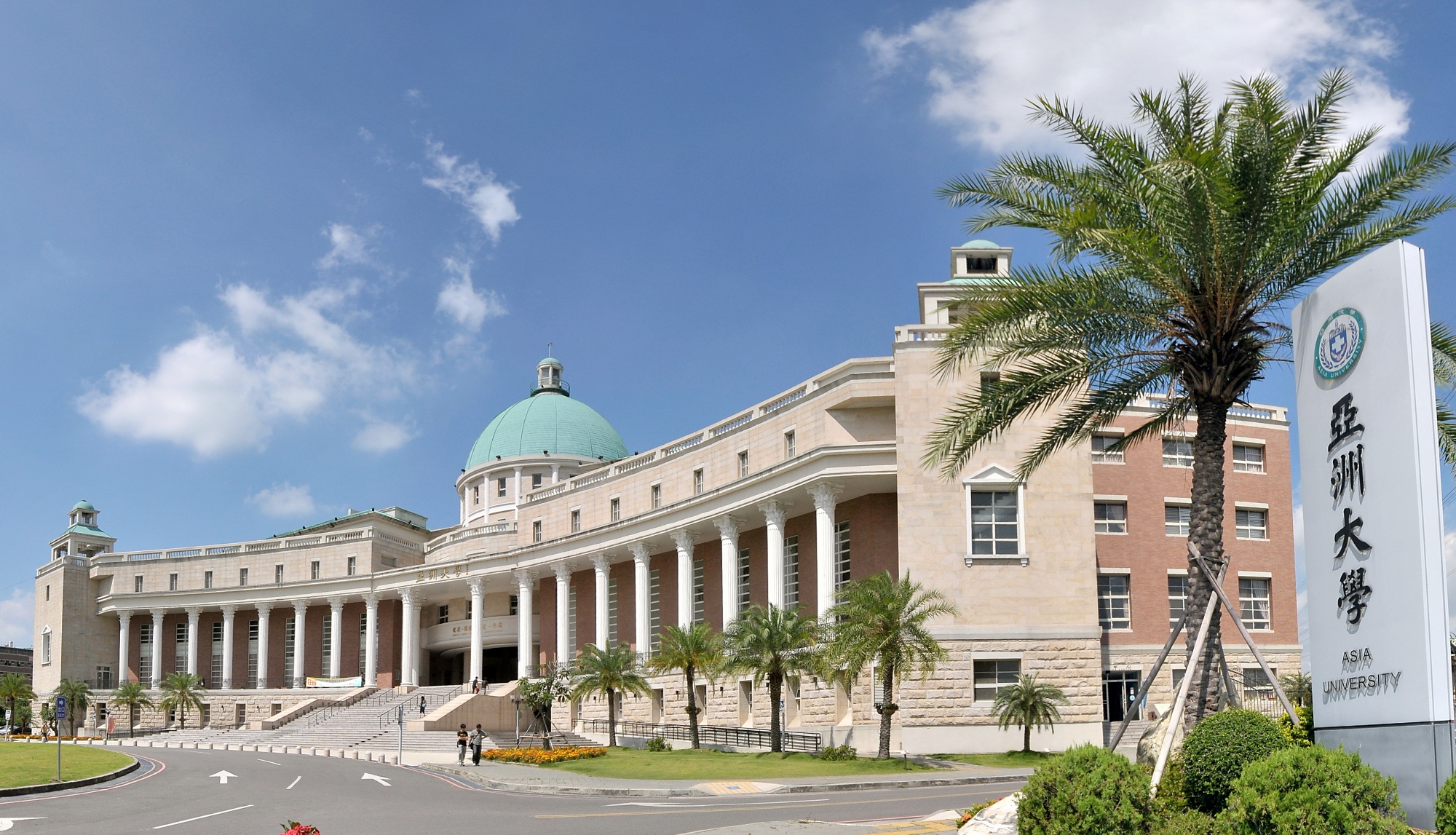
With a global vision and deep humanistic foundation, Asia University is building a modern campus that embodies both intelligence and warmth.